

How-to — task-oriented recipe.
Want more detail? Saved views in a list — complete guide covers these same steps with screenshots, explains how view variants keep New and Classic Lists compatible, and includes the Classic Lists procedure.
Overview
Create and manage saved views to quickly access your preferred List configurations. In New Lists, saved views now preserve filters and sorts along with column selections, and support view variants that maintain compatibility with Classic Lists while enabling advanced features.Prerequisites
- Access to a List in Affinity
- Understanding of filters and sorts (optional but helpful)
- Edit permission on the List for creating views
Steps
Part 1: Create a New Saved View
Step 1: Configure Your View
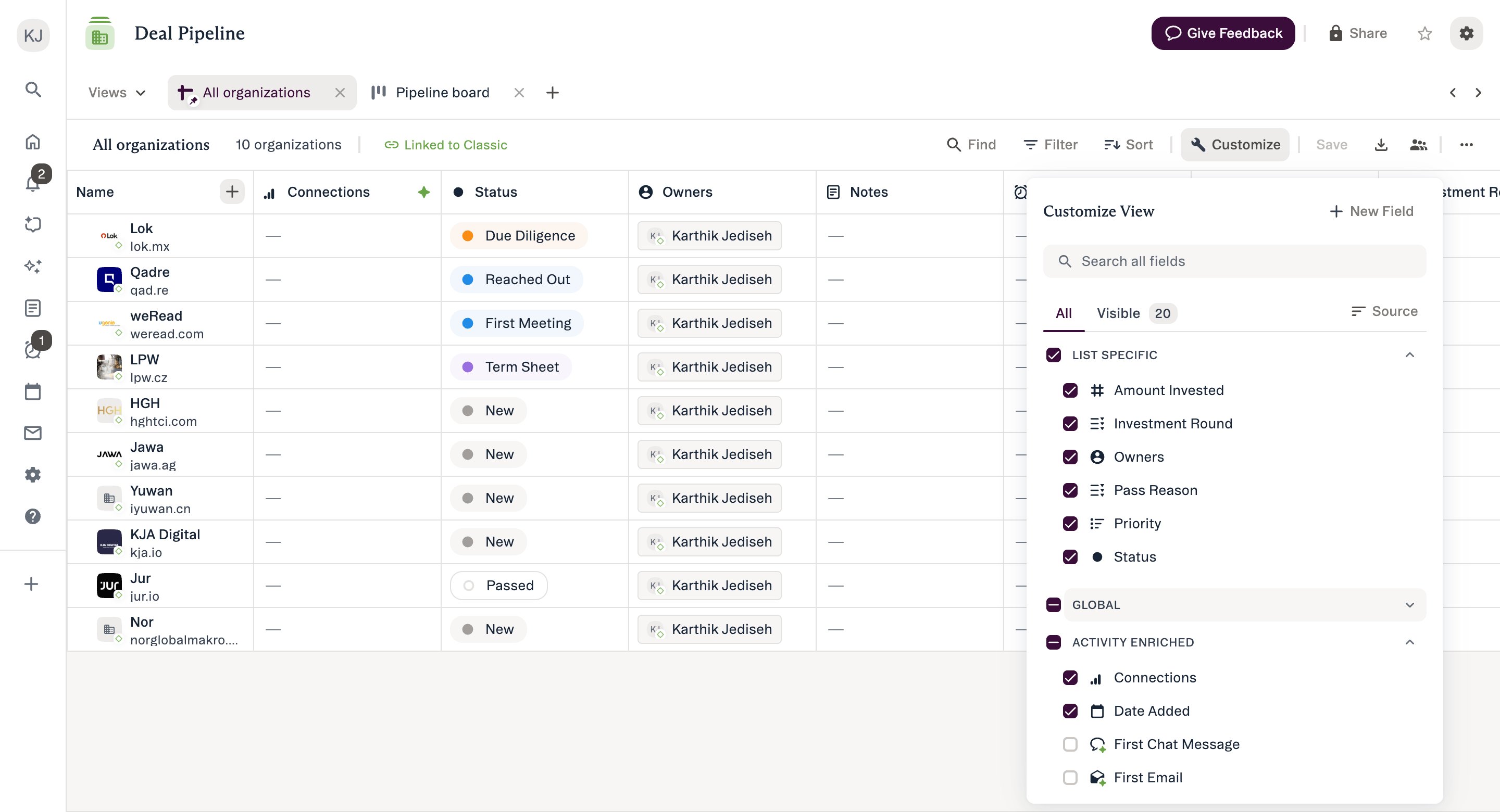
- Open the List where you want to create a saved view
- Apply your desired configuration:
- Filters: Set up filter conditions (see How to Filter and Sort in New Lists)
- Sorts: Add sort orders (up to 5 in New Lists)
- Columns: Show/hide columns using Customize View panel
- Column order: Drag columns to reorder
- Column width: Resize columns as needed Tip: Test your configuration before saving to ensure it shows the data you want
Step 2: Save the View
You can also start a brand new view from the + button beside the view tabs, which lets you pick the view type up front.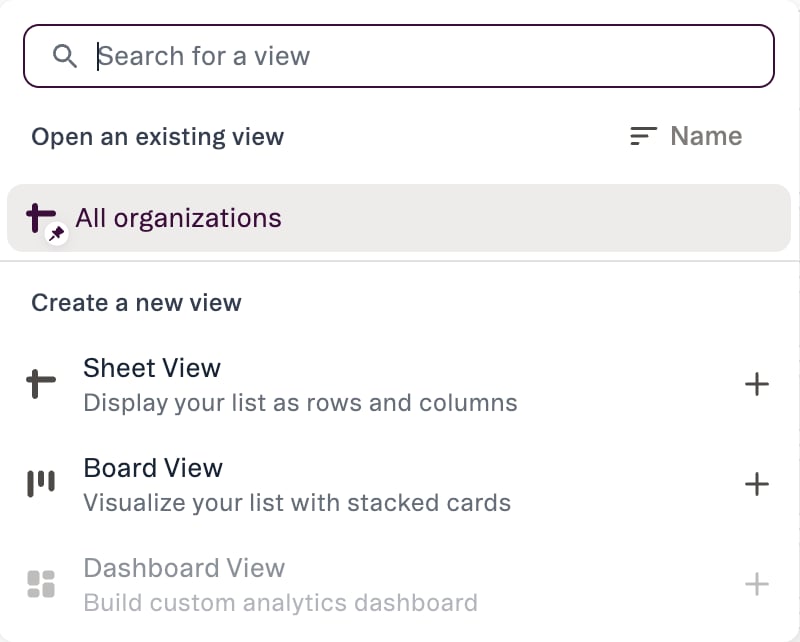
- Click the Save button (appears when you have unsaved changes)
- The Save View modal appears
- Click Save
Step 3: Verify View Creation
- Your new view appears in the view selector dropdown
- Click the view selector to see your new view in the list
- Views are in alphabetical order, with an icon to indicate if private or shared. First save in New Lists creates a variant: Given that the filtering and sorting in New Lists is not compatible with Classic Lists, the first time you save in New Lists, you’ll see a confirmation that you’re creating a New Lists variant separate from Classic Lists. This is normal and allows both experiences to work simultaneously.
Part 2: Use and Switch Between Views

Switching Views
- Click the view selector dropdown (shows current view name)
- Select any view from the list:
- Pinned views: Appear at top with pin icon (team defaults)
- Your private views: Your personal views
- Shared views: Team views everyone can access
- List immediately updates to show that view’s configuration
Using View Variants (New Lists Only)
A variant is created the first time you save this view in New Lists. Affinity explains what’s about to happen before it does: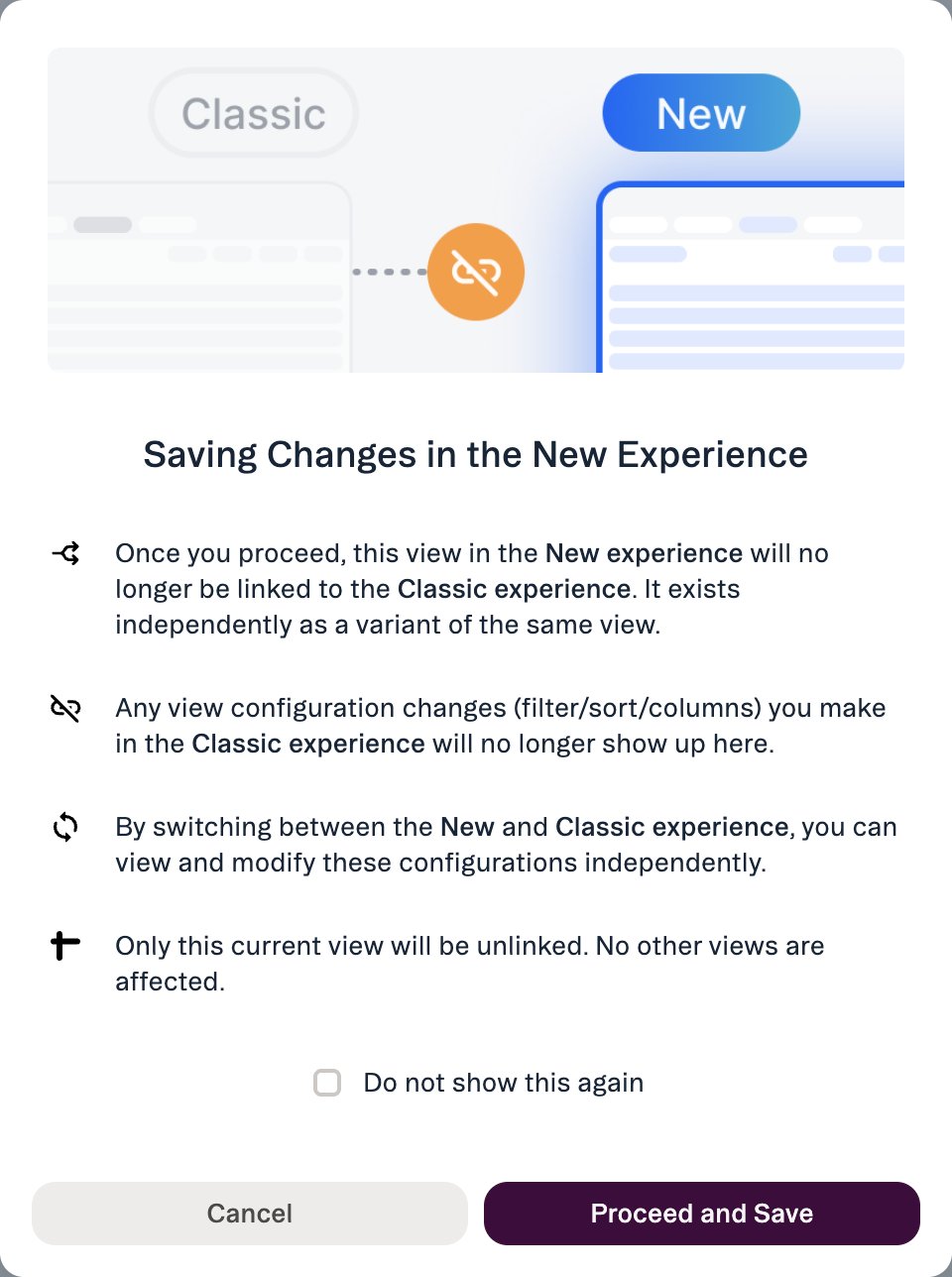
- Check the label in the view header
- Toggle between:
- New Lists variant: Advanced filters, more sorts, New Lists features
- Classic Lists variant: Simpler configuration, Classic-compatible
- Use whichever variant suits your current needs When to use each:
- New Lists variant: When you need advanced features or more control
- Classic variant: When sharing context with Classic Lists users or wanting simpler setup
Part 3: Update an Existing Saved View
Step 1: Make Changes
- Open the view you want to update
- Make your changes:
- Add/remove filters
- Adjust sorts
- Show/hide columns
- Reorder or resize columns
- Unsaved changes indicator appears

There is no “unsaved changes” message. The only signals are the Save button becoming active and a count badge appearing on Filter or Sort. If you navigate away with unsaved changes, your browser warns you before leaving.
Step 2: Save
To save changes:- Click Save button
- Click Save changes
- View updates for everyone with access (if Shared) Permission note: If Save is disabled, you don’t have edit permission. Duplicate the view to create your own editable copy.
Part 4: Save as a New View
When to Save as a new view
- Experimenting without affecting shared team view
- Creating personal variant of team view
- Testing filter combinations before committing
- Building multiple similar views for different purposes
Step 1: Duplicate the View
- Open the view you want to duplicate
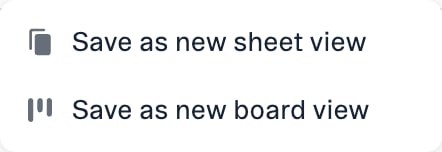
- Click the Sheet View Menu (the … button at the right-hand end of the view toolbar)
- Select Save as new sheet view — or Save as new board view to turn the current configuration into a board
- Duplicate modal appears
Step 2: Name and Save Duplicate
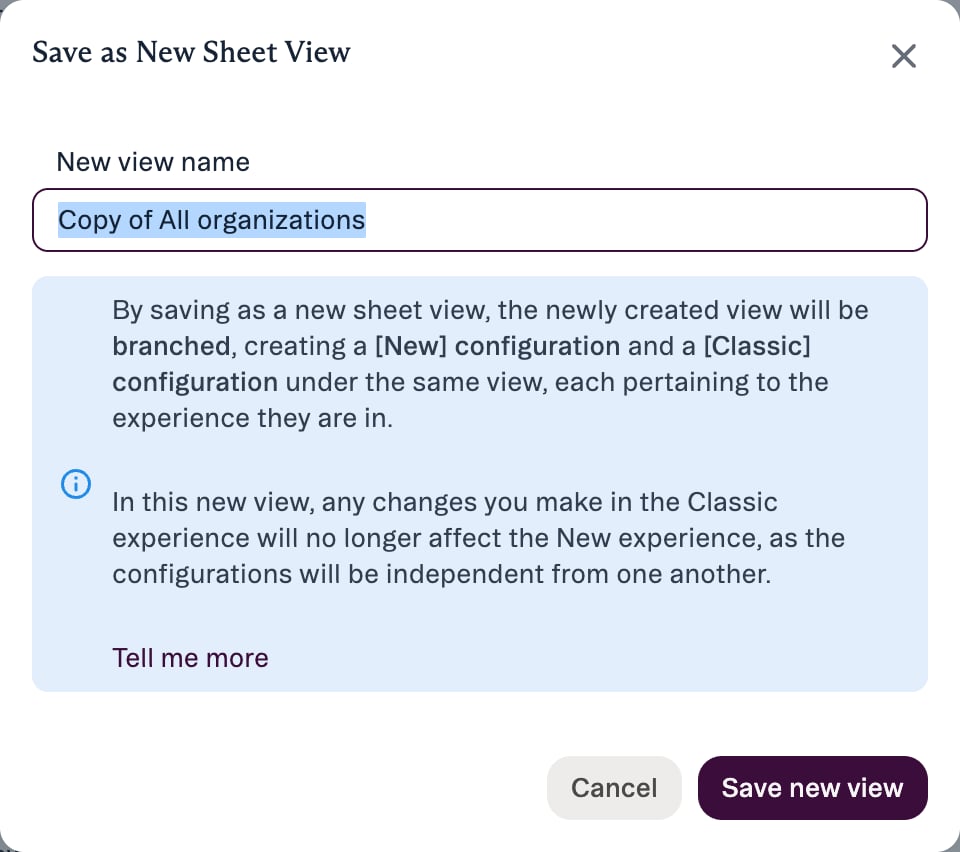
- Default name: “Copy of ORIGINAL”
- Rename to something descriptive
- Duplicated view includes:
- All Classic Lists configuration
- If duplicated in New Lists AND original has New variant: New Lists variant too
- If duplicated in Classic OR original has no New variant: No New variant (starts Linked to Classic)
- Click Save
Step 3: Customize Duplicate
- Make changes to your duplicated view
- Save changes
- Original view remains unchanged
Expected Outcome
- Saved views that instantly load your preferred configurations
- Ability to switch between multiple perspectives on your data
- Shared views enabling team collaboration and standardization
- Private views for personal workflows and experimentation
- View variants maintaining both New Lists and Classic Lists compatibility
- No need to recreate filters, sorts, or column layouts manually
Tips & Best Practices
View Creation:- Test before saving: Verify filters show expected data
- Name descriptively: “West Coast Active Deals” not “View 1”
- Start Private: Test personally before sharing with team
- Use duplication: Copy and modify rather than editing team views View Management:
- Delete unused views: Keep view selector clean
- Review quarterly: Archive or delete stale views
- Document complex views: Add notes in team wiki if filters are intricate
- Communicate changes: Tell team before updating shared views Permissions Strategy:
- Toggle OFF for team views: Prevents accidental changes
- Toggle ON for collaborative views: When team co-manages configuration
- Private for experiments: Test before sharing
- Duplicate before editing: Never change team views directly Naming Conventions:
- Include owner: “Sarah’s Portfolio Review”
- Include purpose: “Data Cleanup - Empty Fields”
- Include geography: “EMEA Prospects”
- Include time: “Q4 2025 Pipeline” Working with Variants:
- Use New Lists variant: When you need advanced filters or more sorts
- Use Classic variant: When collaborating with Classic Lists users
- Version toggle: Switch between variants as needed